About
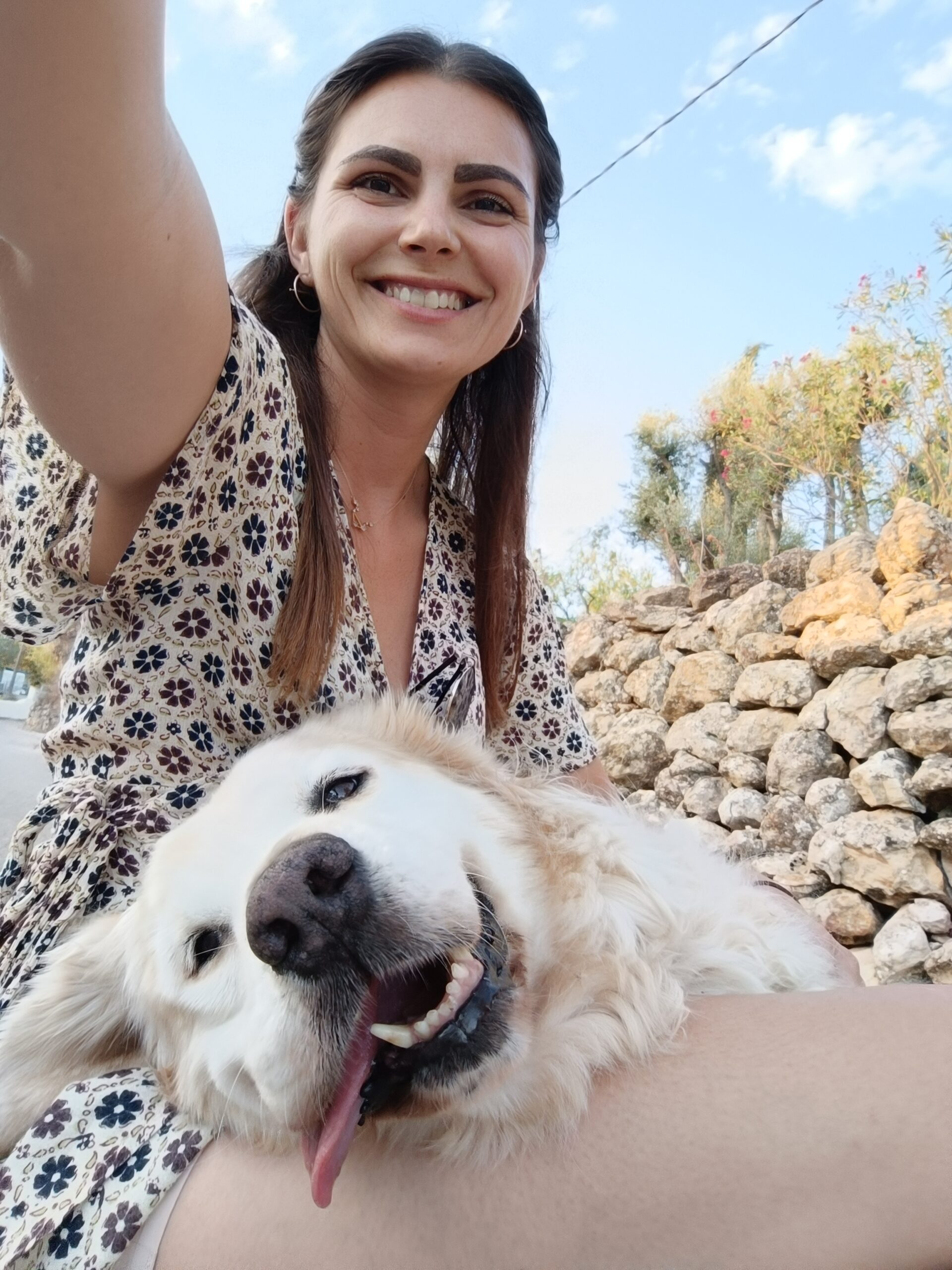
I’m Viola, and I created this space because it’s what I wish I had found when I adopted my dog, Balú.
When we adopt a dog, we almost always do it with expectations, with an idea of what life with them will be like. I had them too: Balú was going to be my work partner in dog-assisted education. I’d been told he was perfect with children.
Reality was very different.He growled at the children. He growled at me. He growled at everyone.
I tried several methods and got conflicting messages: dominance, forced exposure, corrections… or, at the other extreme, working only with food. Nothing felt right to me. I didn’t want to build our relationship on fear or submission, or reduce it to a simple trade of treats.
To help him better, I trained as a dog trainer with a respectful approach. Balú improved, but we got stuck. I still didn’t understand some things about our day to day, and that left me feeling guilty and made me demand more and more of myself.
Then I realised that what was keeping us stuck wasn’t Balú, and it wasn’t me. It was everything I’d been told about how life with a dog should be, and how little it looked like ours.. I had to be honest with myself, let go of the dog I had imagined and start accepting the one in front of me. That’s when I started to see the parallels between who he was and who I was. I discovered I couldn’t separate what was happening to him from what was happening to me: we were both part of the same story.
That’s why I created this space. Because Because what society usually calls a “good dog” or a “bad dog” almost always comes from a single question: is it convenient for me? That one-way view leaves out the most important thing: a relationship goes both ways, and reality is far more complex than that label.
Behaviour gives us information about how our dog is responding to their environment. To understand it, we need to look beyond what they do and take into account everything that shapes life together.
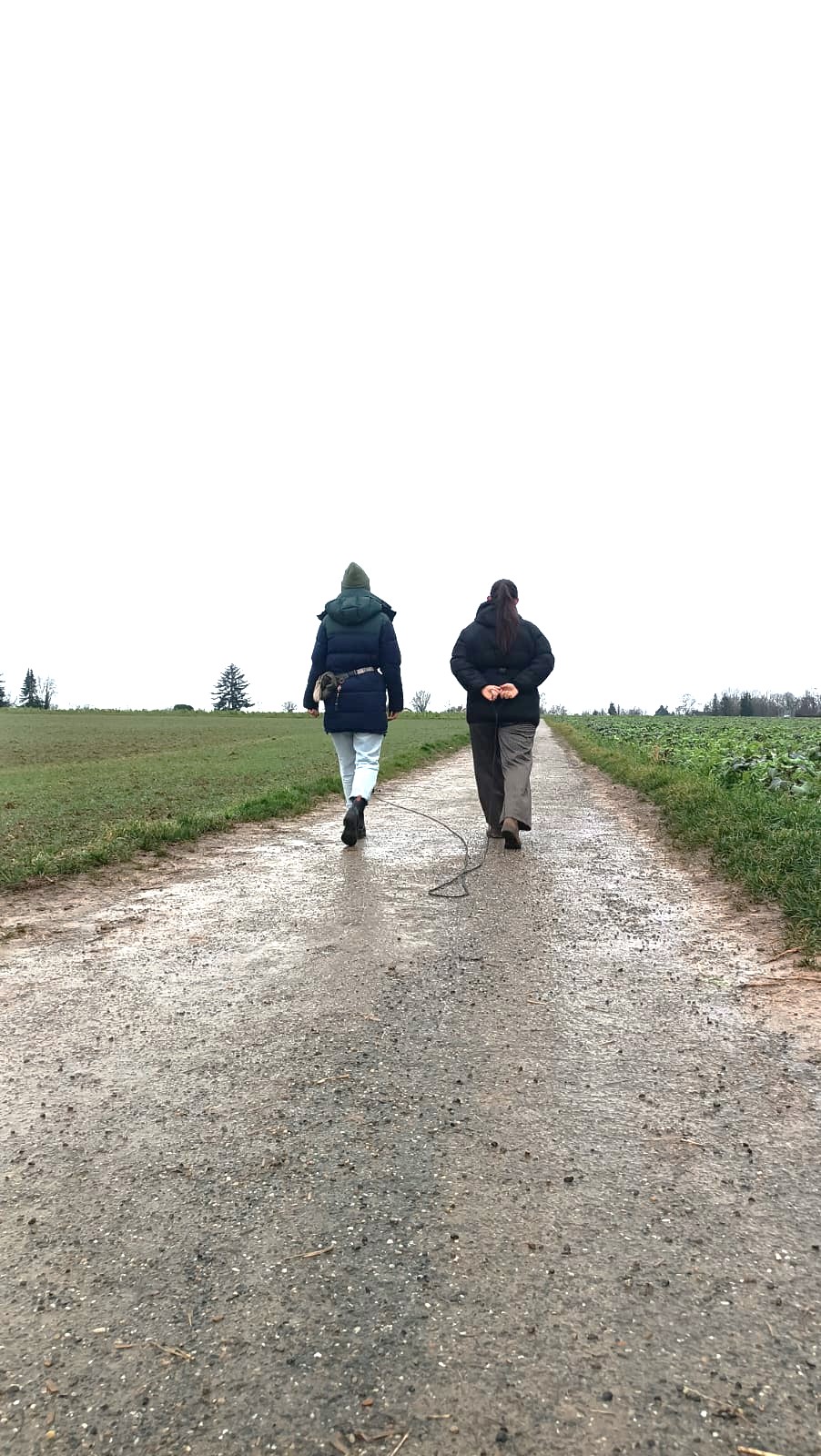
Hard times can also be the start of something new. That’s why I combine dog training and social work: to support both ends of the lead.
This is what working together looks like
When we live with a dog, it’s not only their needs, their emotions and their behaviour that matter. Yours matter too.
It’s easy to look for the answer in them alone: what’s wrong, why they react that way, what they need to learn. But life together also depends on how you are: the stage of life you’re going through, your expectations, your own resources at that moment. And very often the fault isn’t yours or your dog’s: it’s everything you were told about how this relationship “should” be,even before you met.
That’s why I combine two diciplines at once: as a canine educatorI help you understand your dog, their language and what they need; as a social worker,I also take into account the person at the other end of the lead: how you’re experiencing the situation, and what you need to cope with it.
There are no generic guidelines or rigid protocols here. Every person and dog pair comes with their own story, so the process adapts to yours. Even so, the path usually goes through three stages:
- We untangle We untangle. Together we look at what’s really happening in your day to day: on walks, at home, when visitors come… and what you feel in those moments: frustration, embarrassment, fear that something will go wrong, and so on. We also look at what you expect from your dog, what beliefs you hold about “how it should be” and what you tell yourself when things don’t turn out the way you imagined.
- We understand. You learn to read your dog’s body language and to understand what they’re telling you through their behaviour. At the same time, we work on what happens to you when that happens: why you react the way you do, and how to settle yourself so you can respond differently.
- We integrate. Together we adjust routines and the environment, adapting to your reality and taking into account what you’ve learned. This step isn’t the end result: it’s a new starting point for your relationship and the way you communicate with each other.